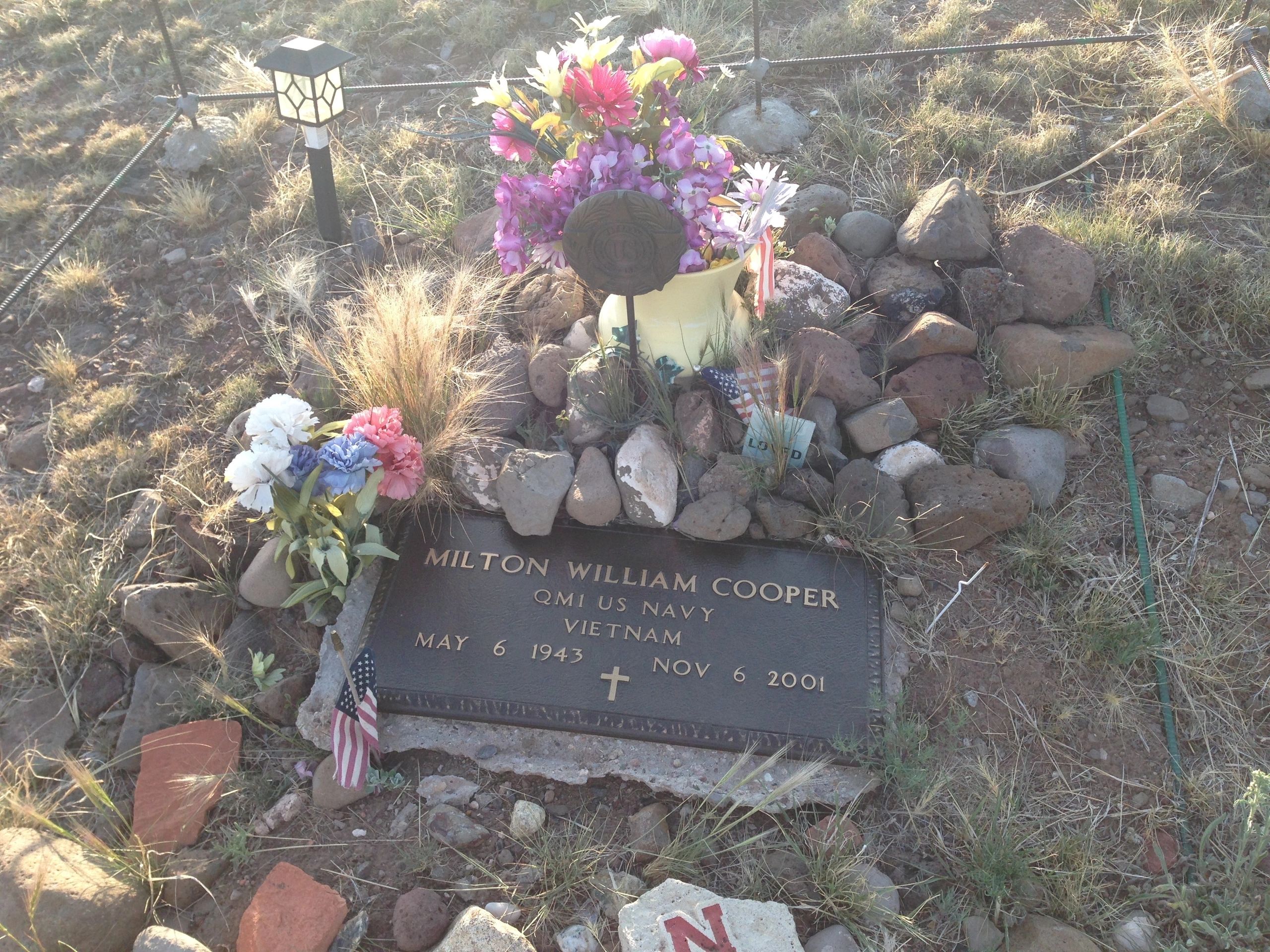
On February 14, 2001, William Cooper opened his broadcast, 'Attack of the Ninja Owls,' with a dramatic pronouncement: 'Well folks, last night, the worst scenario was almost realized.' This broadcast, aired a mere nine months before his violent death on his own doorstep, served as a theatrical backdrop for Cooper to recount a supposed midnight raid on his property. While Cooper’s narrative was delivered with his trademark bravado—detailing his swift tactical response to repel invaders—a closer analysis of the recording suggests a different reality. Upon critical re-examination, the logistical details of the event begin to fragment. This article explores the inconsistencies within the 'Ninja Owls' broadcast, questioning not only the veracity of the account but also the underlying motivations that may have driven Cooper to broadcast such a logically fraught narrative.

An objective analysis of the broadcast reveals several logistical discrepancies that challenge the narrative's credibility. The primary inconsistency involves Cooper’s perimeter security system. According to his account, the engagement began when one of several motion-sensor alarms—positioned strategically around his mountain property—was triggered.
During the broadcast, Cooper notably apologized to local residents for the 'commotion' and noise caused by these alarms that night. This detail creates a significant tactical paradox: if the alarms were loud enough to disturb the neighborhood, they would have served as an immediate deterrent to any covert team. Had the intruders been professional 'raiders,' an audible alarm would typically result in an immediate retreat or a shift in tactics. Yet, in Cooper's retelling, the invaders continued their advance regardless of the siren. If the alarms were, conversely, silent 'house-only' alerts, Cooper’s public apology to his neighbors becomes unnecessary. This contradiction suggests that the 'commotion' may have been performative rather than a response to a genuine external threat.
The inconsistencies deepen when examining the physical security infrastructure Cooper claimed to possess. Beyond the motion sensors, Cooper’s narrative included 'Sentry guard posts' purportedly manned by militia members. However, during the actual events of November 2001, there is no record of such personnel or fortified positions being active. This raises a significant investigative question: why did a security apparatus described as robust in February appear non-existent a mere nine months later? Also, beyond the tactical contradictions, one must also consider the practical environment of Cooper’s mountain property. In the high-desert and mountainous terrain of rural Arizona, the local ecosystem is densely populated with wildlife.If a series of motion-sensor alarms were truly as sensitive and widespread as Cooper described, they would have been subject to near-constant activation by deer, coyotes, or elk moving through the brush.
Furthermore, the climax of the 'Ninja Owls' broadcast centers on a high-powered spotlight attached to the residence, which Cooper claimed illuminated the entire area upon being triggered by an intruder. Logically, if such a system existed, the movement of Cooper’s dog, 'Crusher,' toward the front of the house would have activated the lighting, immediately alerting both the residents and the alleged assailants. Yet, in the documentation of Cooper’s death, this lighting system is conspicuously absent.
Perhaps the most glaring tactical error in Cooper’s story is his decision to leave the safety of his home to pursue the 'invaders' on foot. By his own logic, doing so would have triggered his own high-powered lights, stripping him of any tactical advantage and leaving him exposed in an illuminated field. The contrast between the elaborate procedures detailed in February and the lack of their implementation during a real threat suggests that the 'Ninja Owls' broadcast may have been more of a rhetorical exercise in bravado than a factual account of a security breach.
When viewed through a traditional lens, the inconsistencies in the 'Ninja Owls' broadcast are glaring. However, a more nuanced possibility emerges: perhaps this episode was never truly intended for his loyal listeners. Instead, it may have been a calculated piece of strategic signaling directed squarely at his adversaries. By broadcasting a detailed, albeit logically flawed, account of repelling an invasion, Cooper was potentially projecting an image of high-level readiness and fortified defense. In this light, the broadcast becomes a form of psychological warfare—a 'keep out' sign posted on the airwaves, designed to sow doubt in the minds of those he believed were closing in. He wasn't just storytelling; he was counter-messaging, using the only weapon he had left to keep his enemies at bay."If we consider the possibility that Cooper’s broadcast was a calculated piece of strategic signaling, we must also consider its unintended consequences. By projecting an image of a property bristling with motion sensors, manned sentry posts, and high-powered illumination, Cooper may have inadvertently dictated the tactics used against him. If his adversaries believed the 'fortress' narrative he broadcast in February, they would have viewed a direct assault on his home as a high-risk operation. This leads to a chilling realization: the very narrative designed to keep enemies at bay may have been the catalyst for the lure that eventually drew him away from his property on that fatal November night. In his effort to make his home an untouchable stronghold through his broadcasts, he may have ensured that any eventual confrontation would take place on his enemies' terms, in the darkness beyond his doorstep.
It is important at this point to clarify that this analysis is not an exercise in character judgment or a disparagement of William Cooper’s legacy. After all this is a William Cooper website, Rather, it is a critical examination of a specific narrative—one that stands in stark contrast to the documented reality of his later experiences. By highlighting these logical inconsistencies, the goal is not to diminish the man, but to better understand the situation he found himself in , his mindset and the messaging of a figure who remains influential to this day. To ignore these discrepancies would be a disservice to the historical record; to examine them is to seek a deeper understanding of the complex relationship between his public broadcasts and his private reality.
one must consider the profound sense of isolation that likely surrounded Cooper in his final months. To maintain a narrative of 'Sentry posts' and 'manned militia' in the face of an increasingly solitary reality suggests a man grappling with deep-seated desperation. In this context, the 'Ninja Owls' broadcast may not have been a simple fabrication, but rather a psychological fortress—a way to project strength and community when, in truth, he was facing his mounting pressures alone. To recognize the discrepancies in his story is not to mock him, but to acknowledge the heavy emotional burden of a great man who felt he had to concoct a grand narrative of resistance just to survive the silence of the night.
Ultimately, the purpose of deconstructing these broadcasts is not to reach a definitive or final verdict on William Cooper. To the contrary, by maintaining an active, critical discussion around his work—questioning the inconsistencies and exploring the mysteries of his narrative—we ensure that his influence remains part of the cultural conversation. In the realm of independent research, silence is the only true end; by keeping the dialogue open and the scrutiny alive, we ensure that Bill, and the questions he raised, continue to be reckoned with. It is through this ongoing analysis that his voice, however complex or contradictory, remains a living part of our collective history.
Regardless of the logistical inconsistencies or the psychological weight he carried, one truth remains beyond dispute: William Cooper was a man who remained in the fight until his final breath. While the details of the 'Ninja Owls' broadcast may raise questions about the nature of his reality at the time, his eventual confrontation in November 2001 proved that his commitment to his principles was not merely rhetorical. He lived, and ultimately died, according to the defiant code he broadcast to the world. Acknowledging the discrepancies in his stories does not diminish his courage; rather, it highlights the human complexity of a man who, even when facing overwhelming isolation, refused to yield to his oppressors.